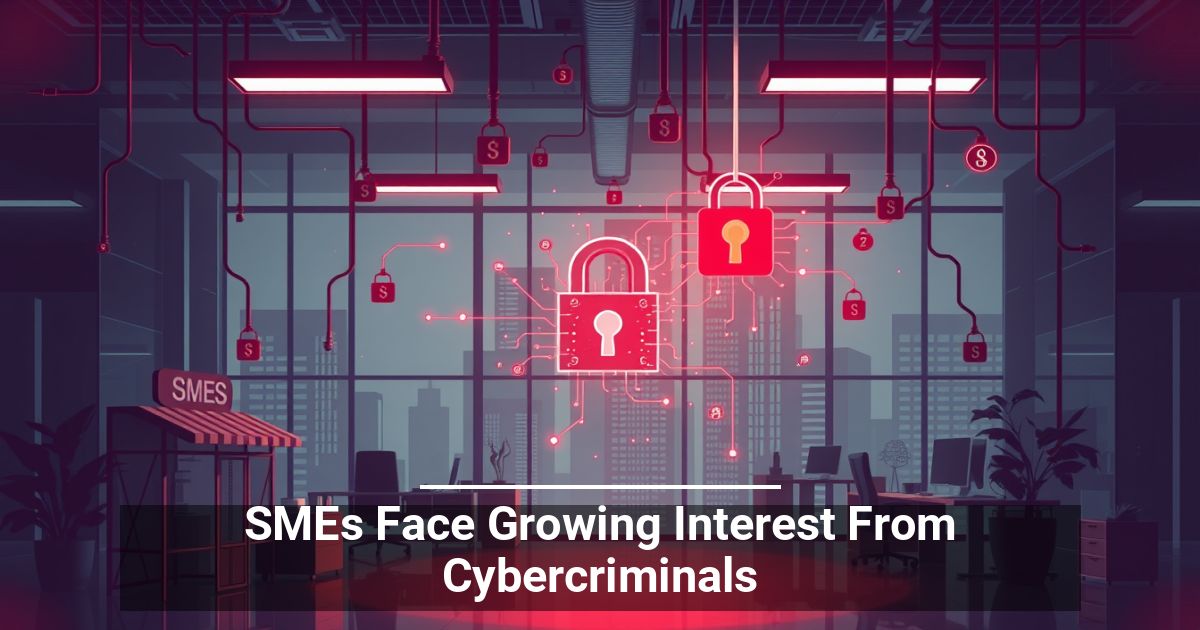
 Ask a small business owner whether they think they’re a target for hackers, and they’ll probably laugh. Why would anyone bother going after a mom-and-pop retailer or PR firm with fewer than 10 employees? There's no billion-dollar payroll or vault of valuable data to make it worth the effort.
That thinking is exactly why cybercriminal interest in SMEs keeps growing. Attackers aren't chasing your company because of what you have. To a cybercriminal, a small or medium-sized enterprise can be a convenient doorway into a much larger organization, customer network, or supply chain, turning a seemingly modest target into a much bigger payday.
Small Businesses Are Part of a Bigger Network
Small and medium-sized enterprises (SMEs) may not have the revenue or headcount of a large corporation, but they often rely on many of the same digital systems. Employees work remotely, vendors exchange data, customers make online payments, and business operations depend on cloud platforms and connected software.
That creates a problem. SMEs can face the same exposure as much larger companies without the same cybersecurity budget or dedicated security staff, which explains cybercriminals' interest in SMEs. Attackers are not necessarily looking for the biggest company. They are looking for an opening that can lead somewhere valuable.
That makes cybersecurity more than an internal IT issue. A company's security practices can affect everyone connected to its digital environment. Unfortunately, that gap between obligation and resourcing is precisely what cybersecurity vulnerabilities thrive on, and criminals know it better than most SME owners do.
Cybercriminals Know Where the Weak Spots Are
Cybersecurity vulnerabilities don’t always come from sophisticated technical flaws. In fact, they’re often the result of something seemingly inconsequential, like a weak password or a poorly protected device.
Cybercriminals going after SMEs use several common tactics, including:
Phishing Attacks
A convincing message can trick an employee into handing over credentials or clicking a malicious link. Once an attacker gets valid login information, breaking through the front door may no longer be necessary. One compromised account may provide access to business systems, customer information, or connections to other organizations.
Ransomware
Instead of simply stealing information, ransomware attacks allow cybercriminals to disrupt access to critical systems and demand payment to restore it. That interruption can be especially painful for a smaller business.
Data Theft
Data theft can create another layer of trouble. Data breaches that lead to the theft of sensitive customer or company information have financial, legal, and reputational consequences that continue long after the initial incident.
Closing the Gap Starts With Awareness
Cybercriminal interest in SMEs isn't a passing trend. It's a structural shift in how attackers choose targets. Businesses need to adapt to protect themselves and avoid becoming a criminal’s way into a bigger target.
That doesn’t require the same security operation as a multinational corporation; it requires taking your exposure risk seriously. Basic protections like keeping software updated, securing employee accounts, backing up important data, training staff to recognize phishing attacks, and monitoring unusual activity can all reduce the chances that a single weakness becomes a major incident.